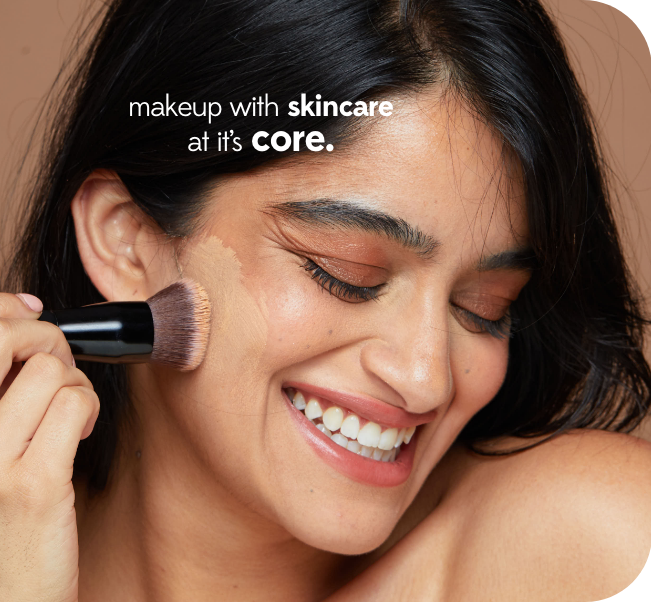
The tool you use to apply foundation changes the finish more than most people realise. Fingers warm the product and press it into the skin for a natural, second-skin effect. A brush deposits more product with each stroke and gives you precise control over coverage and placement. A damp sponge bounces product on for an airbrushed, diffused look. None of them is universally "best."
Each one suits a different formula, finish, and skin type. If your foundation looks slightly different every time you apply it, the inconsistency is almost certainly the tool, not the product itself. Here's what each application method actually does and when to reach for it.
How Your Tool Changes the Finish
The same foundation applied three different ways will give you three noticeably different results. Understanding what each method does helps you stop blaming the formula and start controlling the outcome.
The Three Methods, Side by Side
Here's how brush, fingers, and sponge compare across the things that matter most for your base.
| Feature | Brush | Fingers | Sponge |
|---|---|---|---|
| Coverage | Medium to buildable | Sheer to light | Light to medium |
| Finish | Polished, even | Natural, skin-like | Airbrushed, diffused |
| Product Use | Moderate | Most efficient | Uses the most product |
| Best With | Liquid, cream foundations | Skin tints, light formulas | All formulas |
| Blending Control | High | Moderate | High |
| Hygiene | Easy to clean weekly | Cleanest (no extra tool) | Needs replacing often |
| Speed | Moderate | Fastest | Moderate |
When a Brush Wins
A brush is the right call when you want control over where product goes and how much coverage each area gets. It's the tool that gives you the most consistent, polished result across your whole face.
The Technique That Makes the Difference
Dot your foundation in five points: forehead, both cheeks, nose, and chin. Using an angled foundation brush, blend outward in gentle circular motions rather than long sweeping strokes. Circular motions work the product into the skin and between fine hairs instead of pushing it across the surface, which prevents streaking.
For areas that need more coverage, like around the nose or on blemishes, tap the brush rather than drag it. Tapping deposits product without disturbing what you've already blended. Build coverage in thin layers rather than loading the brush up front.
Why Synthetic Bristles Work Better for Clean Formulas
Natural-hair brushes can absorb plant oils from clean foundation formulas, which wastes product and makes the brush harder to clean. Synthetic bristles don't absorb, so more of your formula ends up on your skin rather than trapped in the brush. A vegan, synthetic-hair brush also avoids the ethical concerns that come with animal-hair alternatives.
When Fingers Are the Better Choice
Fingers aren't lazy. They're the most efficient application method for sheer, skin-like formulas where you want minimal product and maximum blend.
The Warmth Advantage
Your body heat warms the foundation as you apply, which helps it melt into the skin rather than sitting on top. For a skin tint designed to give light, buildable coverage, this warmth effect produces the most natural finish of any application method.
Press and pat the product into your skin rather than rubbing. Rubbing can move product around unevenly and disturb any primer you've applied underneath. Start from the centre of your face and press outward toward your hairline and jawline.
When to Skip Fingers
Fingers struggle with heavier coverage needs and can transfer bacteria if your hands aren't freshly washed. If you're spot concealing with a liquid concealer before foundation, fingers on the concealer can disturb the placement when you layer foundation over the top. A brush or sponge gives the concealer space to stay put.
The Sponge Question
A damp beauty sponge gives a beautiful, diffused finish, but it absorbs the most product of any method. If you're using a clean formula with plant oils and actives, a significant portion of those ingredients ends up inside the sponge instead of on your skin. Sponges also need replacing every few weeks to stay hygienic, which adds cost and waste over time.
When a Sponge Earns Its Place
Sponges are still the best tool for blending out the edges of heavier coverage or smoothing the transition between concealer and foundation. Dampen the sponge, squeeze out the excess, and bounce it along your jawline and hairline where the foundation meets bare skin. For the rest of your face, a brush or your fingers will deliver more product where you need it.
The Right Finish Starts Before the Tool
No application method fixes a bad base. If your foundation looks patchy or separates by midday, the issue might be further up the routine. A hydrating primer gives the foundation grip without silicones.
A setting powder locks everything in place. And a setting mist at the end adds lasting power without flattening the finish. The tool you choose applies the product. The routine around it decides whether it stays.
Pick your method based on the coverage and finish you want, prep your skin properly, and let the formula do the rest. See the full foundation range and pair it with the right technique.
Frequently Asked Questions
Is it better to apply foundation with a brush or fingers?
It depends on the finish you want. A brush gives a polished, even result with more coverage control. Fingers give the most natural, skin-like finish and waste the least product. For sheer skin tints, fingers often work best. For buildable coverage, a brush wins.
Does a foundation brush give better coverage than fingers?
Yes. A brush deposits more product per stroke and allows you to build coverage in targeted areas without over-applying elsewhere. Fingers press product into the skin, which gives a sheerer, more diffused result.
What type of brush is best for liquid foundation?
An angled or flat-top brush with dense, synthetic bristles works best for liquid and cream foundations. Synthetic bristles don't absorb plant oils from clean formulas, which means more product reaches your skin.
Should I use a damp sponge for foundation?
A damp sponge gives a beautiful, airbrushed finish but absorbs the most product. It's best for blending edges and smoothing transitions rather than full-face application, especially with clean formulas where you want the active ingredients on your skin, not inside the sponge.
How do I stop my foundation from looking streaky?
Use circular motions rather than long strokes when applying with a brush. If using fingers, press and pat instead of rubbing. Build coverage in thin layers, and make sure your skin is properly prepped with primer so the foundation has a smooth, hydrated surface to grip.
How often should I clean my foundation brush?
At least once a week with a mild cleanser or gentle shampoo. Rinse thoroughly and lay flat to dry before the next use. A dirty brush transfers old product and bacteria onto your skin and affects the evenness of your application.