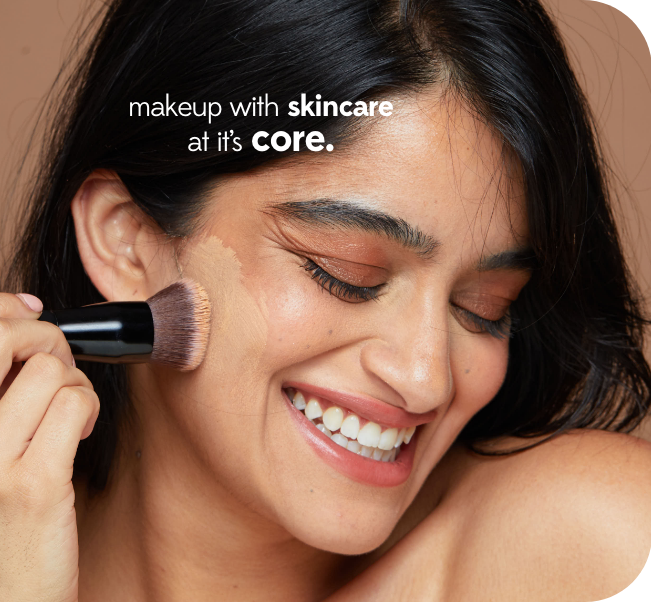
Glass skin is the makeup trend that refuses to retire, and for good reason. That dewy, almost translucent finish where your skin looks hydrated, even-toned, and lit from somewhere just beneath the surface is the kind of look people want but rarely know how to build.
Most tutorials point you toward silicone-heavy primers, synthetic setting sprays, and products that sit on top of your skin rather than working with it. But glass skin makeup doesn't have to come at the cost of your skin's health. Clean, plant-based formulas can get you the same reflective, plump finish without microplastics, petrochemicals, or pore-clogging film-formers. Here's how to build it, prep to set.
Skin Prep Is Half the Finish
Glass skin starts before you pick up any colour product. If your base isn't hydrated and smooth, no amount of layering will fake the glow.
Why Your Primer Matters More Than Your Highlighter
A silicone-based primer fills in pores temporarily but blocks your skin from breathing underneath. A hydrating primer with niacinamide and olive squalane does something different: it smooths texture, locks in moisture with aloe vera and hyaluronic acid, and gives your skin a plump, blurred canvas that holds makeup without suffocating it.
Glass skin needs light to bounce off the surface evenly, and that starts with a genuinely hydrated base, not a synthetic filler. If the primer disappears into your skin instead of sitting on top of it, you're on the right track.
Clean vs. Conventional: What's Under the Glow
Not every glass skin routine is built the same way. Here's how a clean approach stacks up against the standard one.
| Step | Clean Glass Skin Routine | Conventional Glass Skin Routine |
|---|---|---|
| Primer | Plant squalane, niacinamide, aloe vera | Dimethicone, cyclopentasiloxane |
| Base | Mineral pigments, coco caprylate, rosehip oil | Synthetic pigments, silicone emollients |
| Setting Step | Plant protein film-formers, green tea, elderberry | Synthetic polymers, alcohol, propellants |
| Skin Feel | Breathable, lightweight, non-sticky | Occlusive, slippery, often drying |
| Skin Benefit | Hydrates and protects while wearing | Cosmetic only, no long-term benefit |
| Certifications | Ecocert/COSMOS certified ingredients | Rarely certified |
Building the Look, Layer by Layer
Glass skin is a layering game. Each step adds a thin veil of hydration and radiance, not coverage. The goal is fewer products doing more, not a ten-step routine that collapses by lunch.
The Three-Product Glass Skin Base
Start with the Hydra-Blur Primer for a smooth, hydrated canvas. Follow with a skin-tint foundation where you need evening out, applied with fingers or a damp sponge for a skin-like finish. Keep the layer thin and buildable rather than going for coverage.
Spot conceal with the Hydra Liquid Concealer only where you need it, blending the edges so nothing sits heavy. The concealer's bakuchiol and olive squalane smooth and brighten the under-eye area while covering, which means your corrective step is also a treatment step. Three products, zero silicones, and the skin underneath is getting hydrated the entire time.
Lock It In Without Losing the Glow
Most setting sprays lock your makeup in place by coating your face in a synthetic film. The Hydra-Set Setting Mist takes a different route. Pollufence, a complex of elderberry, pomegranate peel, and bitter cherry extracts, forms a breathable protective layer while defending against pollution-related oxidative stress. Green tea calms visible redness. Niacinamide supports your skin barrier and refines pores. Hold it six to eight inches from your face and mist in a light, even layer. Your makeup is set, your skin is treated, and the dewy finish stays put.
What Glass Skin Is Not
Glass skin gets confused with oily skin, heavy highlighter, or a wet-look finish that photographs well but feels uncomfortable in real life. Worth knowing the difference before you build.
The Honest Boundaries
Glass skin is a hydrated, radiant finish that looks like healthy skin with minimal makeup. Not a greasy forehead. Not shimmer packed onto cheekbones. Not a filter you can only see on screen. The look works best with sheer, buildable products and a setting step that adds hydration rather than mattifying everything flat.
Powder compacts, heavy foundations, and alcohol-based setting sprays all work against the glass skin finish. If your setting product strips the glow you just built, it's the wrong product for the job. The right finishing step should hold the look together without flattening it.
Your Setting Mist Should Do More Than Set
A finishing spray that only keeps your makeup in place is doing the minimum. If the same mist can hydrate, protect against pollution, and refine your pores while it sets, there's no good reason to settle for less.
Ruby's Organics Hydra-Set Setting Mist is alcohol-free, powered by Pollufence and niacinamide, and formulated with COSMOS-certified ingredients. Vegan, silicone-free, and made for Indian skin. If your glass skin routine ends with a spray that dries your face out, start with a skin tint that actually treats your skin and build from there.
Frequently Asked Questions
How do I get glass skin with clean or natural makeup products?
Start with a hydrating, silicone-free primer, layer a sheer skin tint for even tone, spot conceal where needed, and finish with a setting mist that adds hydration rather than a matte film. Clean glass skin is about layering moisture, not coverage.
What products give a dewy glass-skin finish?
A hydrating primer, a skin-tint foundation, a lightweight concealer, and an alcohol-free setting mist. Avoid anything that mattifies heavily or contains synthetic film-formers, as those flatten the natural glow.
Is glass skin achievable on oily skin?
Yes. Use a primer with niacinamide to balance oil production, a skin tint with mineral clay for natural oil control, and a setting mist instead of a powder to keep the dewy finish without adding shine. The key is controlling oil without stripping moisture.
Does glass skin makeup last all day?
With the right prep and setting step, it holds well through a regular day. A hydrating primer gives the base grip, and a setting mist with plant-based film-formers keeps everything in place without the stiffness of conventional sprays.
Can I get glass skin without foundation?
Absolutely. Primer, concealer on targeted spots, and a setting mist can give you the glass skin effect without any foundation. The less product you use, the more your actual skin texture shows through, which is the whole point.
What's the difference between glass skin and dewy skin?
Dewy skin just means a non-matte finish. Glass skin is more specific: an almost translucent, ultra-smooth, reflective look where the skin appears plump and evenly lit. Glass skin requires better prep and thinner layers than a standard dewy finish.