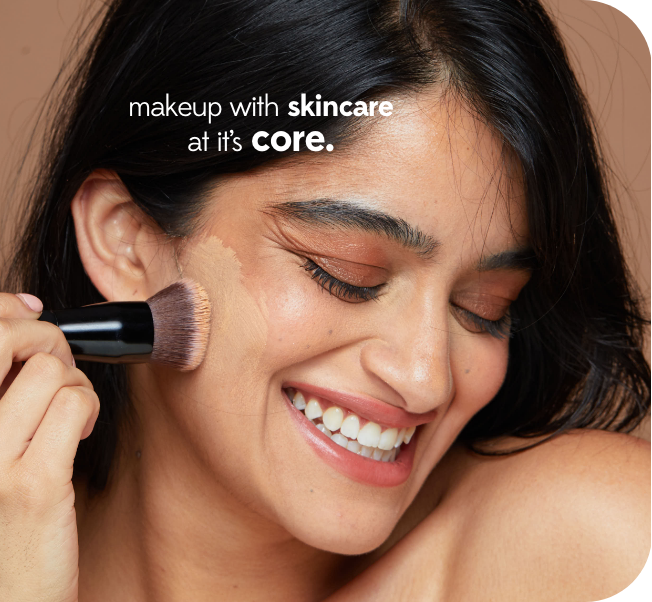
Your foundation looks incredible for about 45 seconds. Then it clings to every dry patch, settles into fine lines, and flakes off around your nose. If your skin is dry, you've lived this. Probably this morning.
The frustrating part? You're doing everything the tutorials say. Primer, foundation, setting powder, blend. But that advice is written for normal-to-oily skin. Dry skin plays by different rules. The prep, formula, and application everything application changes. Even how you set it (or whether you set it at all) changes. Here's the breakdown that works.
Step 1: Skincare Is Your Real First Layer (Not Primer)
A foundation for dry skin is only as good as the base underneath it. If your skin is dehydrated before makeup even touches it, no formula will sit well.
The Prep Routine
- Cleanse with a gentle, non-foaming cleanser. Foaming formulas strip moisture.
- Apply a hydrating serum (hyaluronic acid or squalane works well).
- Follow with a rich moisturiser. Let it absorb for a full minute.
- Finish with SPF. The Tinted Mineral Sunscreen gives SPF 40 with a universal tint and no white cast. It adds a layer of hydration before primer.
Rushing this step is why the foundation flakes. Give skincare a full 60 seconds to sink in.
Step 2: Pick a Primer That Hydrates, Not Just Smooths
Most primers are built for oily skin. They mattify, absorb oil, and create a "grip." Dry skin doesn't need grip. It needs moisture and a smooth canvas.
The Hydra-Blur Primer is silicone-free and uses olive squalane and aloe vera to hydrate while blurring pores. It feels like water, not like a film. For dry skin, this is the step that prevents foundation from catching on texture.
Step 3: Choose the Right Foundation Formula
Not every formula works on dry skin. Here's what to look for and what to avoid when picking the best foundation for dry skin:
| Formula Type | Works on Dry Skin? | Why |
|---|---|---|
| Matte liquid | No | Emphasises dryness, clings to flakes |
| Powder foundation | No | Sits on top, looks chalky |
| Dewy/hydrating liquid | Yes | Adds moisture, blends into skin |
| Skin tint | Yes | Lightweight, breathable, skin-like |
| Cream foundation | Sometimes | Can be heavy but hydrating |
A lightweight foundation for dry skin should contain plant oils, squalane, or butters that nourish while covering. The Skin-Tint Mattifying Foundation works because it's formulated with rosehip seed oil and vitamin C, which hydrate and support skin renewal. Despite the "mattifying" in the name, the finish is natural and skin-like, not flat or drying.
For days when even a skin tint feels like too much, use the Hydra Liquid Concealer on spots only. Bakuchiol and olive squalane keep it hydrated and crease-free, making it one of the best foundations for dry skin in India, an alternative when you want minimal coverage.
Step 4: Apply With Your Fingers
Brushes can drag across dry patches and lift flakes. Beauty sponges absorb product. For dry skin, fingertips are the best tool. Your body heat warms the formula and helps it melt into your skin instead of sitting on top.
The Right Technique
- Dot foundation on forehead, cheeks, nose, and chin.
- Press and pat outward with fingertips. Don't drag or rub.
- Build in thin layers. One sheer layer often covers enough on dry skin.
- Blend concealer the same way: tap, don't swipe.
Step 5: Set Strategically
This is where dry skin routines differ the most. Heavy powder over a hydrating base defeats the purpose. Your skin needs moisture to stay put.
The Minimal Set
Use a Compact Setting Powder only on your T-zone: forehead, nose, and chin. Press gently with a puff. Skip the cheeks entirely. The natural dewiness on your cheeks is your best finish, not a problem to fix.
For colour, add a Cream Blush that melts into skin. Cream formulas sit better on dry skin than powder blush, which can look patchy and chalky.
Your Skin Isn't the Problem; the Routine Was.
Foundation for dry skin works beautifully when the prep, formula, and application are all aligned. Hydrate first, prime with moisture, choose a lightweight foundation for dry skin with plant-based oils, apply with warm fingertips, and set only where you need to.
The full range of hydrating, skin-first base products at Ruby's Organics is Ecocert/COSMOS certified, silicone-free, and made for skin that needs care and coverage in equal measure.
Frequently Asked Questions
Q. What is the best foundation for dry skin?
A hydrating skin tint or dewy liquid formula with plant oils and squalane. Avoid matte and powder foundations that cling to dry patches and settle into lines.
Q. Can I use mattifying foundation on dry skin?
Only if the formula contains hydrating ingredients like rosehip oil or squalane. A skin tint with natural mattifying agents like kaolin clay can work if the base prep is hydrating enough.
Q. How do I stop foundation from flaking on dry skin?
Prep with a hydrating serum and rich moisturiser. Use a silicone-free, hydrating primer. Apply foundation with fingertips in thin layers. Skip heavy powder setting.
Q. Should I use a beauty sponge or fingers on dry skin?
Fingers. Your body heat warms the product and helps it blend into your skin. Beauty sponges can absorb product and leave a less even finish on dry, textured skin.
Q. What is the best foundation for dry skin in India?
A lightweight foundation for dry skin with plant oils, Ecocert certification, and no silicones works best in Indian climates. Skin tints with rosehip or squalane balance hydration with breathability.
Q. Do I need to set a foundation if I have dry skin?
Only on your T-zone. Skip powder on cheeks to keep the dewy finish. Cream blush and no-powder zones let your skin's natural moisture show through.