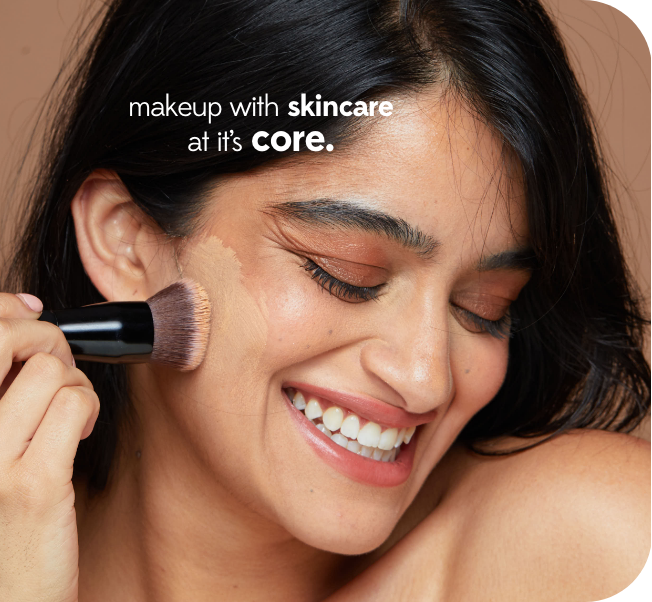
A great base look lives or dies at the setting stage. You can nail your foundation, perfect your concealer placement, and still watch everything slide off by lunch if your setting powder isn’t doing its job. Or worse, it does its job a little too enthusiastically and leaves you looking chalky, cakey, or five shades lighter than your neck.
Choosing the right setting powder is about more than grabbing whatever compact is on sale. It’s about understanding your skin type, matching your shade to Indian complexions (which most global brands still get wrong), and knowing what ingredients to avoid. If you’ve ever wondered how to choose compact powder shade without the trial-and-error heartbreak, this guide is for you.
What Does Setting Powder Actually Do? (More Than You Think)
Setting powder locks your base makeup in place, absorbs excess oil, and creates a smooth, blurred finish that makes your skin look polished without looking powdery. A good lightweight setting powder Indian skin responds well to will also blur the appearance of pores and fine lines, giving you that soft-focus, real-skin finish.
But not all powders are created equal. Conventional compacts often rely on talc as the primary absorbent, which can clog pores, feel heavy on the skin, and irritate sensitive or acne-prone complexions. If you’ve ever felt like your powder was suffocating your skin rather than perfecting it, the formula was likely the problem.
Talc Free Compact Powder: Why It Matters More Than You’d Expect
Talc has been a staple in setting powders for decades because it’s cheap and effective at absorbing oil. But it comes with trade-offs. Talc can clog pores, settle into fine lines, and feel uncomfortably heavy in Indian humidity. For anyone with sensitive, acne-prone, or reactive skin, a talc free compact powder India brands are now offering is a significantly safer choice.
The question is: what replaces talc without sacrificing performance? Ruby’s Organics Compact Setting Powder uses rice starch, arrowroot, and bamboo silica as natural absorbents that control oil just as effectively as talc, but with a lighter, more breathable finish. These plant-based alternatives also help retain your skin’s natural moisture instead of stripping it, so you get matte without the desert-dry aftermath.
It also contains bakuchiol, a plant-based alternative to retinol that helps reduce the appearance of fine lines and improve skin texture over time. So you’re not just setting your makeup, you’re treating your skin while you wear it. That’s what a genuine organic face powder should do.
How to Choose Compact Powder Shade for Indian Skin (Without Getting It Wrong)
Shade-matching a compact powder is trickier than matching a foundation because powder catches light differently and can oxidise on oily skin. Getting the wrong compact powder shade India-specific is one of the most common base makeup mistakes, and it usually shows up as a greyish cast on deeper skin or an orange tint on fairer complexions.
The golden rule: your setting powder should disappear into your skin. It should never be visible as a separate layer. When figuring out how to choose compact powder shade, match it to your foundation shade or go one shade lighter if you’re using it primarily for under-eye setting. Never go darker for setting purposes.
Ruby’s Organics Compact Setting Powder comes in 4 shades specifically calibrated for Indian skin tones:
SP 1: Fair skin tones. A light, neutral base that sets without adding warmth or ashiness.
SP 2: Light to medium skin tones. The most versatile shade for the majority of Indian complexions.
SP 3: Medium to deep skin tones. Warm enough to blend seamlessly without greying.
SP 4: Deep, rich skin tones. Designed to set without the chalky residue that most compacts leave on darker complexions.
If you’re between shades, always lean toward the one closest to your foundation match. Swatching along your jawline in natural light is still the most reliable test.
Setting Powder for Oily Skin: What Indian Summers Demand
If your T-zone has a personal vendetta against your makeup, you need a setting powder for oily skin India’s climate specifically demands: lightweight, mattifying, and resilient enough to handle humidity without caking.
The mistake most women make? Over-powdering. Loading on thick layers of powder to combat oil actually triggers your skin to produce more sebum, creating a vicious cycle. The smarter approach is using a lightweight setting powder Indian skin responds to, applied strategically rather than everywhere.
Press your Compact Setting Powder onto your T-zone (forehead, nose, chin) with a brush or puff, and leave the cheeks powder-free to retain a natural, healthy glow. Reapply with blotting papers first, then a light dusting of powder, rather than layering powder on top of oil. Rice starch and bamboo silica in Ruby’s formula absorb oil without drying, making it ideal as a natural setting powder without talc for oily and combination skin types.
Dry Skin? You Can Still Set Your Makeup (Without Looking Like a Desert)
Women with dry skin often skip setting powder entirely because conventional formulas emphasise every flake and dry patch. But the right powder, applied correctly, actually smooths rather than emphasises.
Look for a natural setting powder without talc that contains hydrating ingredients alongside absorbents. Ruby’s Compact uses kokum butter, shea butter, and jojoba oil in its formula, so it sets your makeup while keeping drier areas comfortable. Apply only where you need it: the centre of the forehead, the bridge of the nose, and the chin. Skip the cheeks and under-eyes entirely, and let those areas maintain their natural dewiness.
The 3-Step Application That Makes Your Powder Look Invisible
Step 1: Wait for your base to set. After applying primer, foundation, and concealer, give everything a minute to settle into your skin. Powdering over a still-wet base is the fastest route to cakiness.
Step 2: Swirl, tap, press. Pick up product with your brush, tap off the excess (this step is non-negotiable), and press the powder onto your skin rather than sweeping it. Pressing deposits colour evenly; sweeping moves your base around.
Step 3: Leave the right areas alone. Powder your T-zone and any areas prone to shine. Leave the high points of your cheeks, your under-eyes, and the perimeter of your face untouched. A strategic application is what separates a soft, blurred finish from a flat, powdery one.
Your Powder Should Do More Than Just Sit There
The best compact powders in 2026 aren’t just about oil control. They’re about improving your skin while they set your makeup. Ruby’s Organics Compact Setting Powder is 98% naturally derived, Ecocert/COSMOS certified, vegan, and formulated with ingredients that actively benefit your skin: bakuchiol for texture improvement, bamboo silica for pore-blurring, and magnesium stearate for a velvet-smooth finish.
It’s an organic face powder that doubles as skincare, a talc free compact powder India has been waiting for, and a lightweight setting powder Indian skin actually deserves. Available in 4 shades designed specifically for Indian complexions.
Done with powders that cake, clog, or turn you grey? Our Compact Setting Powder is talc-free, 98% naturally derived, and powered by bakuchiol and bamboo silica. Sets makeup, blurs pores, controls shine. 4 shades for Indian skin. Shop the collection.
Frequently Asked Questions
Q. How do I choose the right compact powder shade for Indian skin?
Match your compact powder to your foundation shade or go one shade lighter for under-eye setting. Swatch along your jawline in natural light and choose the shade that disappears into your skin rather than sitting visibly on top.
Q. Is talc free setting powder better for oily skin?
Yes. Talc can clog pores and feel heavy, especially in humid Indian weather. Plant-based absorbents like rice starch, arrowroot, and bamboo silica control oil just as effectively while keeping the formula lightweight and breathable.
Q. Can I use setting powder on dry skin?
Yes, but apply it strategically. Use it only on areas prone to oil and shine, like the T-zone, and skip the cheeks and under-eyes. Choose a formula with hydrating ingredients like jojoba oil and shea butter so it doesn’t emphasise dry patches.
Q. What is the difference between setting powder and compact powder?
Setting powder is designed to lock makeup in place and control shine. Compact powder refers to the pressed format (as opposed to loose). Many compacts function as both setting powders and touch-up powders. Ruby’s Compact Setting Powder gives you the fine-milled performance of a loose powder in a portable, pressed format.
Q. Should I powder my entire face?
No. Powdering your entire face can flatten your complexion and look unnatural. Focus on the T-zone and any areas prone to oiliness. Leave the cheeks and perimeter of your face untouched for a more natural, dimensional finish.