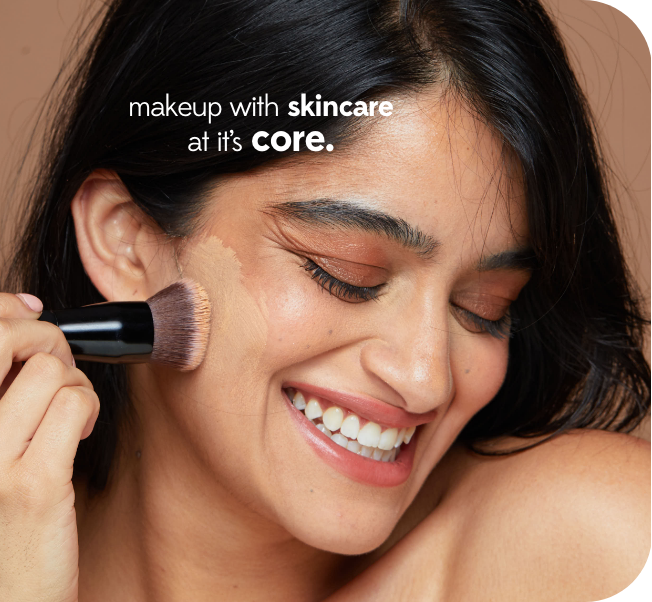
Wearing makeup when your skin is actively breaking out feels like a trap. Cover the blemishes and risk making them worse, or skip makeup entirely and spend the day feeling self-conscious. Neither option is great, and honestly? You shouldn’t have to choose. The right makeup for acne-prone skin doesn’t clog pores, doesn’t irritate, and doesn’t punish you for wanting to look polished on a bad skin day.
At Ruby’s Organics, we built our entire range around one idea: makeup that treats your skin while it covers it. Every formula is silicone-free, microplastic-free, and made with plant-based actives that your skin actually benefits from wearing. If you’ve been burned by a foundation for acne skin that promised the world and delivered a fresh crop of pimples, keep reading. We’re about to change the game for you.
Why Most Makeup Makes Acne Worse (And What to Look For Instead)
Most conventional makeup is loaded with silicones, synthetic oils, and pore-clogging fillers that create a seal over the skin. For acne-prone types, that seal traps bacteria, sweat, and sebum underneath, basically a breakout incubator. When shopping for non-comedogenic makeup, India brands offer, look for: no silicones (anything ending in “-cone”), no mineral oil, no synthetic fragrances, and no parabens. What you want instead are plant oils that mimic your skin’s natural sebum, mineral-based pigments, and actives that calm rather than aggravate.
The Acne-Friendly Routine, Step by Step
Here’s exactly how we’d build a full makeup routine using products that are genuinely safe for breakout-prone skin.
Protect First With a Mineral Sunscreen (Not a Chemical One)
Chemical sunscreens can trigger inflammation in acne-prone skin. Mineral formulas sit on top and reflect UV rays without penetrating or irritating. Our Tinted Mineral Sunscreen SPF 40 uses zinc oxide for broad-spectrum protection with a lightweight tint that blends into Indian skin tones. The cleanest base layer you can give your skin.
Prime Without Silicone (Yes, It’s Possible)
Most primers feel silky because they’re loaded with dimethicone, which is terrible news for acne-prone pores. Our Hydra-Blur Primer skips silicone entirely and uses niacinamide (a hero for acne, known to regulate oil and reduce redness) plus olive squalane for hydration. It blurs pores and creates a smooth canvas without trapping anything underneath.
Choose a Foundation That Lets Your Skin Breathe
Heavy, full-coverage foundations are the number one culprit behind makeup-induced breakouts. A foundation for acne skin should be lightweight, buildable, and made with ingredients that actively help. Our Skin-Tint Mattifying Foundation is naturally derived, silicone-free, and formulated with kaolin clay (absorbs excess oil without stripping), argan oil, and jojoba oil. Jojoba is particularly brilliant for acne because it mimics human sebum, so your skin stops overproducing its own. Not sure about your shade? The Foundation Trial Pack lets you swatch at home.
Spot Conceal With Something That Heals, Not Hides
Piling concealer over active breakouts usually makes them angrier. Our Hydra Liquid Concealer is powered by bakuchiol, a plant-based retinol alternative that brightens and supports cell turnover, exactly what acne-prone skin needs. Tap a tiny amount over blemishes with your ring finger. The goal with makeup for acne-prone skin is always coverage that calms, not coverage that suffocates.
Set Strategically (Over-Powdering Is the Enemy)
Acne-prone skin needs powder, but only where oil builds up. Our Compact Setting Powder is talc-free, using rice starch and bamboo silica to mattify without clogging. Press a light amount onto the T-zone with a clean brush and leave the rest alone. Over-powdering traps oil and creates that cakey look nobody wants, especially on textured skin.
Keep Cheek Colour Clean and Lightweight
Skip powder blush if your skin is breakout-prone. Our Cream Blush range is made with jojoba oil, cocoa butter, and resveratrol, so it melts into skin without sitting in pores. The Onestick is another great pick: use it on cheeks and lips with one product, meaning fewer brushes touching your face and fewer opportunities for bacteria transfer.
Finish With Lips and Eyes That Won’t Cause Chin Breakouts
Lip products with synthetic fragrances and heavy waxes are a sneaky cause of chin breakouts. Our lipsticks and Lip Oil Gloss are made with castor oil, plant waxes, and zero artificial fragrance. For eyes, the Hybrid Mascara is carbon black-free and enriched with shea butter, and the Tinted Brow Gel uses castor oil to nourish while it defines.
Your Skin Shouldn’t Have to Suffer for a Good Makeup Day
Makeup for acne-prone skin doesn’t mean settling for boring products that barely show up. It means choosing formulas that treat, nourish, and protect while delivering the coverage you want. Our entire Base Collection is built on ECOCERT/COSMOS certified ingredients, free from every major pore-clogging offender, and designed for Indian skin. Your breakouts don’t get a say in how good you look.
Ready to overhaul your base? Shop the full range of acne-friendly, clean makeup at Ruby’s Organics.
Frequently Asked Questions
Q. Can I wear makeup if I have active acne?
Yes, as long as you choose products that are silicone-free, fragrance-free, and made with ingredients that won’t clog pores. Plant-based formulas with actives like niacinamide, bakuchiol, and jojoba oil are ideal.
Q. What should I avoid in the foundation for acne skin?
Silicones (dimethicone, cyclomethicone), mineral oil, synthetic fragrances, and heavy waxes. All of these can trap bacteria and oil in the pores and worsen breakouts.
Q. Is Ruby’s Organics makeup safe for acne-prone skin?
Yes. Every product is silicone-free, microplastic-free, paraben-free, and made with ECOCERT/COSMOS certified ingredients. Key actives like kaolin clay, niacinamide, bakuchiol, and jojoba oil actively support acne-prone skin.
Q. What does non-comedogenic mean?
It means the product is formulated not to block pores. Ingredients are chosen specifically because they allow skin to breathe and don’t contribute to the buildup that causes breakouts.
Q. Should I skip setting powder if I have acne?
Don’t skip it entirely, but use it sparingly. A light dusting on the T-zone with a talc-free formula is enough. Over-powdering can trap oil and make textured skin look worse.
Q. Can organic makeup actually help with acne?
It can support your skin rather than harm it. Ingredients like niacinamide regulate oil, bakuchiol supports cell turnover, and jojoba oil balances sebum production. While makeup isn’t a treatment, the right formulas won’t make things worse and may actually help over time.