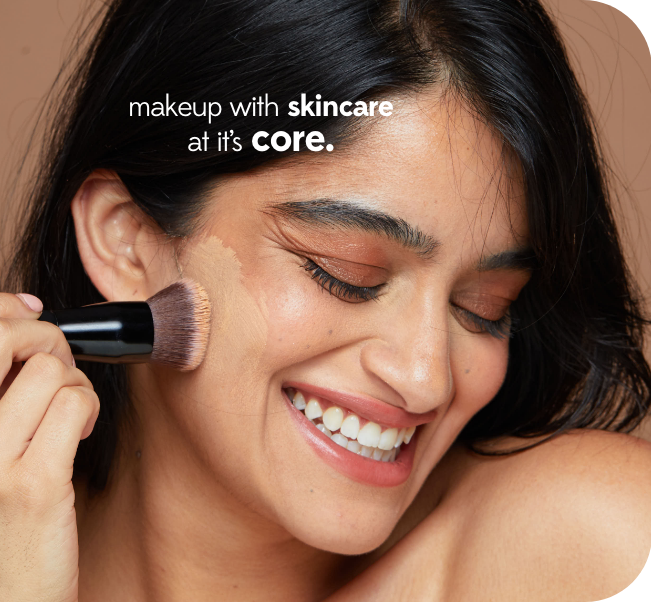
Your foundation is doing the most, and not in a good way. If your T-zone turns into an oil slick by lunch, you've probably blamed your skin. But more often than not, the real problem is what's sitting on it. Most conventional bases are loaded with silicones, petrochemicals, and synthetic film-formers that trap oil, clog pores, and leave you looking like you dipped your face in ghee by 3 PM.
A natural foundation built for oily skin works differently. It controls shine without stripping moisture, breathes with your skin instead of suffocating it, and actually improves texture over time. Here's what to check before you buy.
Your Foundation Might Be Breaking You Out (Not Your Skin)
Oily skin gets a bad reputation, but it's rarely the villain. The real culprit? Formulas packed with pore-clogging silicones and petroleum-derived ingredients that sit on your skin like cling film.
What "Natural" Actually Means in a Foundation
A natural foundation uses plant-derived oils, mineral pigments, and bio-based emollients instead of synthetic fillers. Look for kaolin clay, rice starch, and plant squalane on the label. If a brand claims "natural" but the first five ingredients are dimethicone and mineral oil, that's your cue to put it back.
Why Silicone-Free Matters for Oily Skin Types
Silicones create a smooth finish, sure, but they also form a barrier that traps sebum underneath. For oily and acne-prone skin, that's a one-way ticket to congestion. A silicone-free base lets your skin regulate oil production naturally while still giving you a blurred, mattified look.
The "Is It Clean Enough?" Checklist
Not every organic foundation is built equal. Before you commit, run through this quick filter.
Ingredients to Avoid
| Ingredient | Why It's a Problem |
|---|---|
| Dimethicone / Cyclopentasiloxane | Traps oil and clogs pores |
| Mineral oil / Paraffin | Petroleum-derived, sits heavy on skin |
| Synthetic fragrances | Can trigger irritation and breakouts |
| Parabens | Linked to skin sensitisation |
| Microplastics | Environmental and skin concerns |
| Carbon black | Harsh pigment source |
Ingredients That Actually Help
Kaolin clay absorbs excess oil without drying. Rosehip seed oil supports barrier repair. Vitamin C brightens dull, uneven patches. These are the kinds of actives a skin-tint mattifying foundation should carry.
Finding Your Shade Without the Guesswork
If you've ever picked up a "universal" shade that made you look ashy or weirdly orange, you're not alone. A tinted foundation for oily skin should actually match Indian skin tones, not offer three shades of beige and call it inclusive.
What to Look for in a Foundation for Brown Skin
Mineral-based pigments like iron oxides adapt better to warm and neutral undertones. Shades formulated for Indian complexions sit naturally on deeper skin without leaving a grey cast or chalky residue. Swatch on your jawline, not the back of your hand.
Coverage That Doesn't Suffocate
Light-to-medium buildable coverage is the sweet spot for daily wear on oily skin. A foundation with skincare benefits should feel like a second skin, not a mask.
Clean vs. Conventional: A Quick Side-by-Side
What separates a clean, plant-based formula from mainstream options at a glance.
| Feature | Clean/Natural Foundation | Conventional Foundation |
|---|---|---|
| Base | Plant oils, coco caprylate | Silicones, petroleum derivatives |
| Oil Control | Mineral clays, rice starch | Synthetic mattifiers |
| Skin Benefits | Rosehip, vitamin C, squalane | Minimal or none |
| Pore Safety | Breathable, won't clog | Often occlusive |
| Fragrance | None or plant-derived | Synthetic fragrances common |
| Certifications | Ecocert/COSMOS certified ingredients | Rarely certified |
Oily Skin Doesn't Need Less, It Needs Smarter
The biggest myth about oily skin? That you should skip moisturising ingredients. Dehydrated oily skin overproduces sebum to compensate. A good natural foundation hydrates with lightweight emollients like olive squalane while clay and starch handle shine.
A hydrating, blurring primer underneath can prep your skin for longer wear. Pair it with a talc-free compact for midday touch-ups, and you've got a routine that works with your skin type.
Your Base, But Make It Skincare
Choosing a natural foundation isn't about trends. It's about not punishing your skin every morning with ingredients that have no business near your face. If it controls oil, sits well on Indian skin tones, and treats your skin while you wear it, that's a base worth keeping.
Ruby's Organics foundations are formulated with COSMOS-certified ingredients, without silicones, microplastics, or petrochemicals. Built like skincare, wears like makeup. If your current base isn't doing both, maybe it's time for a switch.
Frequently Asked Questions
Q. What makes a foundation "natural" or "clean"?
It uses plant-derived, mineral, or bio-based ingredients instead of synthetic chemicals, silicones, and petroleum derivatives. Look for Ecocert or COSMOS certification on the label.
Q. Is a natural foundation good for oily skin?
Yes. Kaolin clay and rice starch absorb oil naturally, while plant-based emollients keep skin balanced. A clean base lets your skin breathe and regulate itself.
Q. Can a natural foundation give enough coverage?
Absolutely. Plant-based mineral pigments deliver light-to-medium buildable coverage. No heavy "caked-on" look, which is the whole point for everyday wear.
Q. Will an organic foundation oxidise on brown skin?
Quality mineral pigments (iron oxides, mica) stay colour-true throughout the day. Swatch in daylight and check after a few hours before committing to a shade.
Q. Do I still need a primer under a natural foundation?
A silicone-free, hydrating primer can help your base last longer and blur texture. Not mandatory, but it makes a noticeable difference in humid weather.
Q. Are natural foundations pregnancy-safe?
Foundations free from parabens, synthetic fragrances, and chemical UV filters are generally a safer pick. Check the label and consult your doctor if unsure.